
Why is Japanese whisky in particular so expensive?
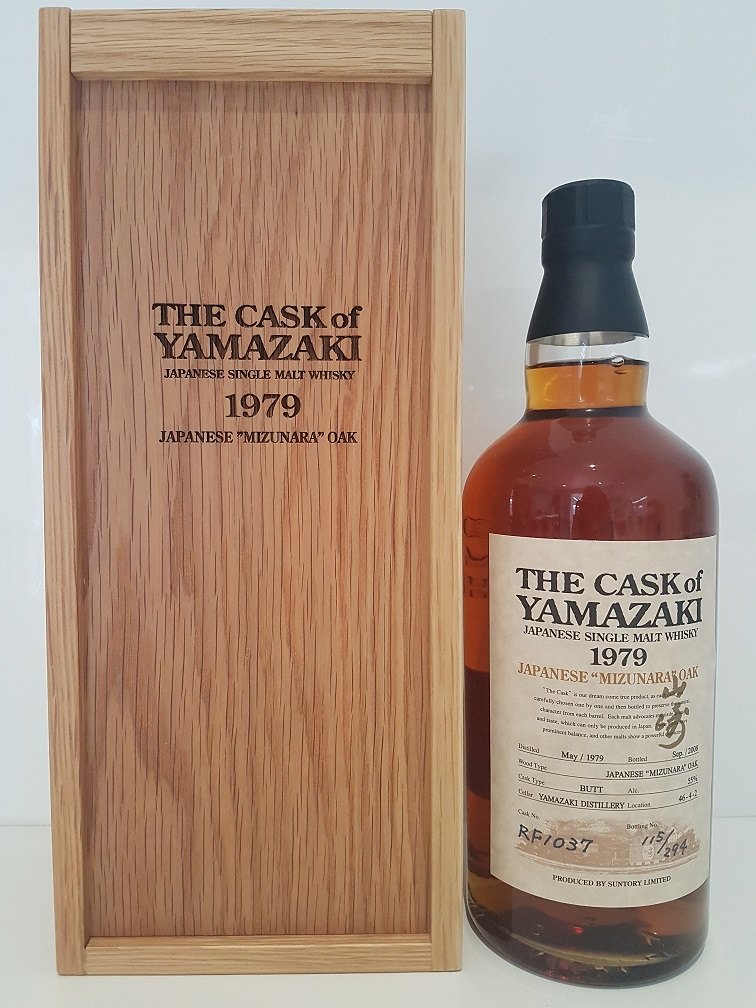
Why is Japanese whisky so expensive? What makes Japanese whisky so special that collectors pay more than 250,000 euros for a bottle of it? Here we get to the bottom of these frequently asked questions and reveal the secret of the highly coveted and often very expensive whiskies from Japanese distilleries.
In the world of drinks, too, there are numerous trends that flatten out again after a few months or years. Japanese whisky, and whisky in general, is certainly subject to such trends. Nevertheless, Japanese whiskies in particular do not seem to be fading any time soon. This is surely helped by the fact that Japanese distillers place great emphasis on perfection in distilling their whisky. At the same time, alongside this expertise, the impressive history and the much-awarded taste have led to unbroken demand, which in some cases makes for rather high prices.
Many questions from customers of Japanese whiskies – which we at Japanwhiskys.com also deal with time and again – concern production, distillation methods and the aromas of Japanese whisky. Increasingly, however, people around the world are also asking how the high price of Japanese whiskies comes about and whether it is justified. In this article we also answer the questions of which is the most expensive Japanese whisky in the world, which other Japanese whiskies can be found in the price segment above 10,000 euros (per bottle!), where collectors can buy rare Japanese whiskies, and whether there are also Japanese whiskies at prices for ordinary consumers. You will find all the answers in the following article, which draws on our own experience and knowledge as well as on a recently published article on foodandwine.com.
Why are Japanese whiskies in particular becoming ever more expensive?
Of course, there are many collectors who contribute to increased demand. But why some bottles can only be offered in small quantities often goes unnoticed. One reason lies in the history of Japanese whisky, which we would like to briefly summarise below.
The key background – the history of Japanese whisky
From the 1930s to the 1980s, Japanese whisky consumption experienced a veritable boom. Every year saw significant growth rates. Many people drank whisky either diluted with a little water or neat. Later, it was also popular with ice in the so-called Japanese highball. At the end of the 1980s, however, shochu, a light drink distilled from rice, enjoyed a considerable boom. Beer also saw significantly increased demand in Japan. Demand for Japanese whisky, on the other hand, collapsed. For this reason, many distilleries were abandoned. Others reduced their annual production. These last two sentences make it clear why Japanese whisky commands such high prices today.
From the end of the 1980s, Japanese distilleries filled significantly fewer casks. Nikka, which owns the Yoichi and Miyagikyo distilleries, even stopped production completely for a few years. These stocks are now missing for current bottlings of new whiskies that would have had a longer maturation.
A clear change only came in 2003, when the Yamazaki 12 Year Old Gold launched by Suntory won at the International Spirits Challenge. In 2004, the 30-year-old Suntory Hibiki received the same award. Since then, the triumphant rise of Japanese whisky has continued. Single malt, grain and blended whiskies from Japanese distilleries have since received numerous awards, and there is no change in sight.
The awards naturally also led to increased demand. Owing to the slump in consumption in the 1980s and 1990s, however, the distilleries' warehouses were rather empty. Some distilleries, such as Hanyu and Karuizawa, had also ceased operations completely and sold their stocks.
How do the record prices for Japanese whisky come about?
Let us take the example of the Karuizawa distillery. It was closed at the turn of the millennium, its stocks were bought up and the site was even completely dismantled. No new stocks can therefore be laid down. But the lost stills and the surroundings of the distillery, including the still-active Asama volcano, also play an important role. Karuizawa whiskies have achieved record prices at auction, with each new bottling pushing prices even higher. Some bottles have been sold for thousands of dollars.
The highest sale price at auction was achieved by the Karuizawa Archer in spring 2017, a bottle of which found a buyer for 128,000 US dollars. In 2016, a bottle of the 50-year-old Yamazaki had already been sold at auction for 129,000 US dollars. In January 2018, a bottle of the Yamazaki 50 was auctioned for 299,000 US dollars. This alone shows the significant increase in prices and demand in recent years. It is therefore only right to ask whether Japanese whisky should be regarded as an investment – a question that is attracting not only collectors but also more and more return-oriented investors.
What sets collectors apart
Unlike investors, who can earn a great deal of money with Japanese whiskies over the years, collectors want to own the bottles regardless of the cost. Only very few bottles will be opened or drunk in the coming years. Rather, they will be traded over the coming years or regarded as an investment – so collectors become investors and make handsome profits. Word of this naturally gets around and increases interest in Japanese whiskies even further. One reason for the fascination with Japanese whiskies and their high prices is therefore that it is almost impossible to suffer a financial loss with them.
Rarer bottlings also ensure that standard blends gain in value. A 12-year-old Japanese whisky, for example, often sells for twice as much as a Scotch. The Yamazaki 12, the Hakushu 12 and the Hibiki 17, for example, which are very popular worldwide, are recording significant price increases.
The distilleries also try, from a strategic point of view, to motivate enthusiasts with small allocations of these bottles. The small bottling quantities ensure that these bottles, too, sell out quickly.
In 2020, the Summer Olympic Games will take place in Japan. For this reason, the large distilleries will surely continue to expand their capacities. A fall in whisky prices, however, is not to be expected.
About us: For our customers from all over the world, we travel regularly to Japan and around the globe in order to offer the best, most expensive, finest and rarest bottles of Japanese whisky in our online shop at japanwhiskys.com. We are doing this well. Most recently, our select international clientele was able to purchase the Black Bowmore 50 Years Old 1964 at japanwhiskys.com. Its price is 34,995 euros. Follow this link and you will find an overview of the most expensive Japanese whiskies in our shop.