
Japanese whisky has seen much greater demand in recent years – is a crisis now looming?
Tokyo: Japan's largest duty-free shop is located at Haneda Airport. Every day, the shelves here are restocked with fine Japanese whisky – and are empty again within minutes. For it is almost impossible to buy Japanese whisky.
"These days we can only secure 12 bottles of Hibiki a day for sale”, said store manager Michihiko Takano. “We put them on the shelves at 7.30 in the morning and they are gone within 10 minutes."
Overall, the supply of Hibiki, Yamazaki and other fine Japanese whiskies is shrinking. Industry experts even say it is turning into a treasure hunt for connoisseurs. In Tokyo's upmarket Ginza district, stocks of vintage Yamazaki are being sold for 50,000 yen (around 450 US dollars).
Demand is particularly high for older whiskies. Here, the online selling price for a bottle of Suntory Yamazaki 12 Year Old recently exceeded 20,000 yen. In two years, the selling price has risen by more than 70 per cent and is twice the company's recommended retail price. The selling price of the Nikka Taketsuru 17 Year Old has also risen by around 10 per cent since the beginning of 2018. Prices have risen sharply, particularly in recent weeks. Many retailers expect Suntory to discontinue some lines soon.
Around a decade ago, things looked very different. Back then, Japanese whisky was not yet so well known and demand was modest. That is why several renowned distilleries closed. Suntory seized the opportunity and worked hard towards the comeback of Japanese whisky. However, demand has far exceeded the company's expectations.
An employee of a spirits shop based in Tokyo's Ginza district commented: “Nobody predicted this would happen. For some buyers, Japanese whisky has become an investment in something they can sell later at a higher price. It's a shame that we can no longer simply enjoy it.”
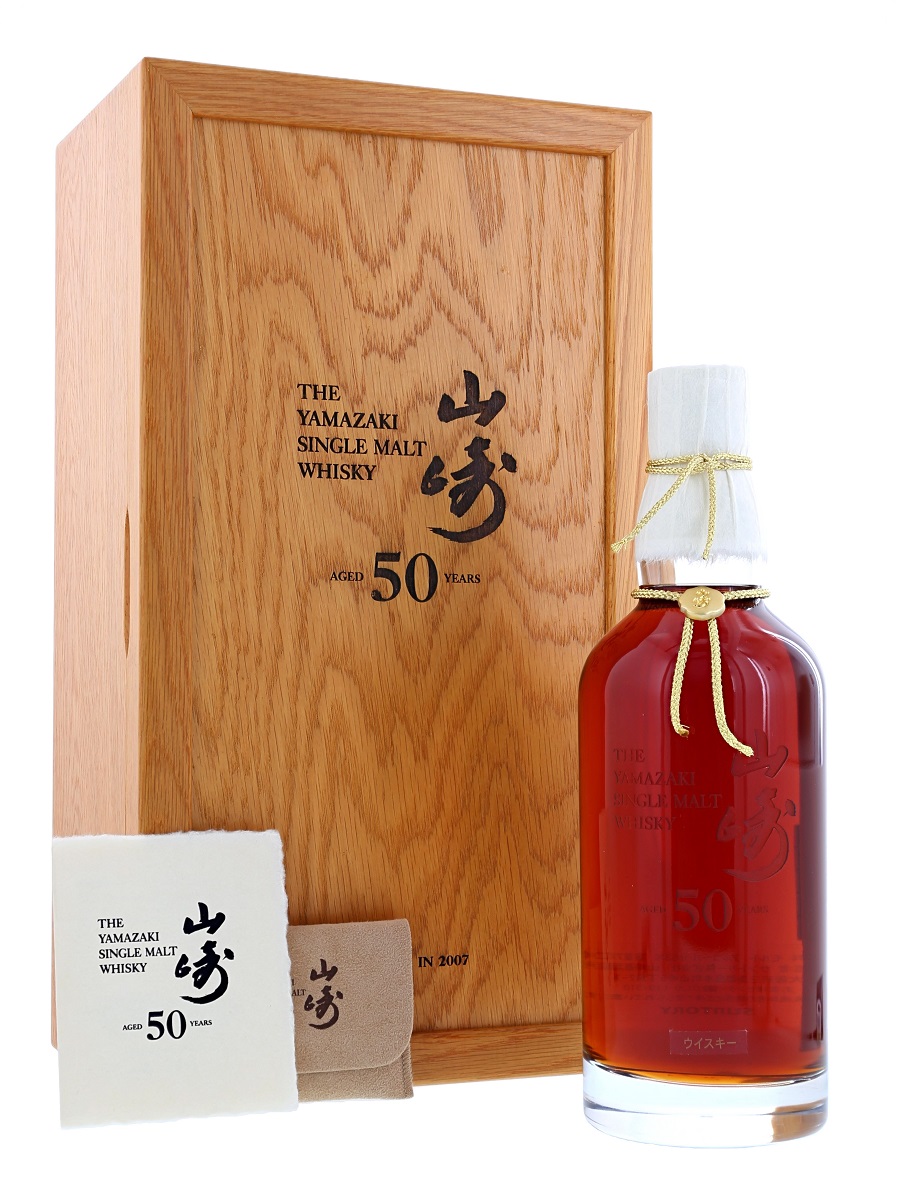
The highest prices are achieved, for example, by the 50-year-old Yamazaki, a bottle of which was auctioned at Sotheby’s in Hong Kong in January 2018 for around 300,000 US dollars. Some prices are rising so quickly that the balance between supply and demand is thrown off and cannot be restored any time soon. A Suntory spokesperson said, for example: “We are investing as much as possible to expand the capacity of our distilleries. But supply does not recover quickly, as the product needs time to mature. For some products, we cannot meet demand.”
The rise of Japanese whisky
Just 10 years ago, Japanese whisky had gone completely out of fashion. According to the National Tax Agency, consumption fell by almost a third between 1989 and 2008 to 75 million litres. Young people in particular did not take to whisky, which was dismissed as an old man's drink.
Perhaps for this reason too, Suntory launched a campaign to make whisky more attractive again. It promoted “highball” drinks, consisting of whisky and soda, which were offered in bars and restaurants. These were complemented by corresponding merchandise, such as branded jugs and glasses. Highball cocktails quickly became a fixture on izakaya pub menus, and Suntory then launched a canned version for private households. Suntory subsequently positioned premium brands such as Yamazaki, Hakushu and Hibiki in the trade in order to meet the increased demand for highball drinks.
Demand received a further boost from a television drama broadcast in 2014. It told the story of Masataka Taketsuru, the first Japanese person to study whisky making in Scotland, who later went on to perfect it. Among other things, he founded the Yamazaki distillery.
Shortly after the turn of the millennium, Yamazaki, Hakushu and other Japanese whisky brands received their first awards at international competitions. Jim Murray, for example, named the Yamazaki Single Malt Sherry Cask 2013 the world's best whisky in his “Whiskey Bible 2015”. At the same time, tourism in Japan experienced a veritable boom. Between 2012 and 2017 alone, the number of foreign tourists tripled.
Some interesting figures
According to the London-based industry research company IWSR, sales of Japanese whisky rose by 47.9 per cent to 13.37 million 9-litre cases between 2011 and 2016 alone. However, these researchers expect the growth rate to probably slow to 12.9 per cent by 2021. Suntory and Japan's other renowned whisky producers are working to continue achieving significantly higher growth rates. Suntory, for example, is planning a number of new strategies. It has now launched “non-aged” variations of its premium brands, which are said to be better suited to highball cocktails. In addition, it has taken over the American whiskey producer Jim Beam.
Suntory's spokesperson explained: We want to offer new products without compromising on quality.” At the same time, the company wants to ensure that “demand, which is slowly brightening, continues to be sustained”. The company announced, for example, that it would invest around 260 million US dollars in expanding its whisky production capacity. Of course, even as production is expanded, the company will continue to focus on maintaining its high standards, as these are crucial for growth. Compromises on quality, on the other hand, would have negative consequences for the Japanese whisky industry, according to the Suntory spokesperson.
Some companies have taken over so-called “shuttered distilleries” and are now launching their own brands. One example is Venture Whisky, which operates a small distillery north of Tokyo. It offers its whisky under the label “Ichiro’s Malt”, which receives enthusiastic reviews worldwide.
Alongside Suntory, Nikka is one of the most renowned producers of Japanese whisky. “But there are also smaller brands that taste good and are affordable”, says Dekanta founder Makiyo Masa.
Whether supply will recover in the coming years remains to be seen. At least until the Olympic Games scheduled to take place in Tokyo in 2020, it is not expected that supply will recover, said Kozo Ishiki, director of the purchasing and management department at Haneda Airport. “This is going to give us a major headache”, said Ishiki. Even then, they will probably only be able to put a certain number of Japanese whisky bottles on the shelves of the duty-free shop each morning, which will then sell out within minutes.